
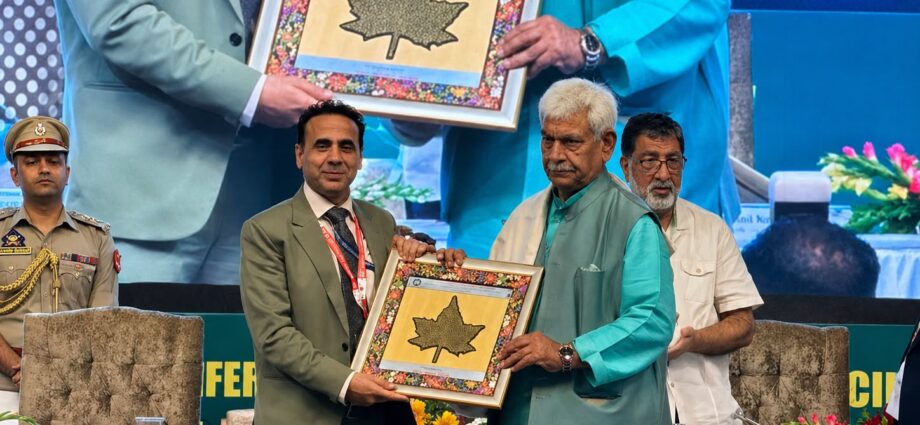
Srinagar, June 10 (KNB): Lieutenant Governor Manoj Sinha on Wednesday underscored the critical role of immunology in tackling emerging global health challenges and called upon scientists and researchers to intensify efforts in immunotherapy, artificial intelligence-driven healthcare solutions, and studies on climate change-related health impacts.
Addressing an immunology conference in Srinagar, the Lieutenant Governor said the COVID-19 pandemic served as a powerful reminder of the importance of scientific research and immunology in safeguarding human lives. He lauded the contribution of immunologists and scientists who worked relentlessly during the pandemic to develop effective interventions and protect millions across the globe.
Referring to continuing global health threats, Sinha said the scientific community’s mission remains unfinished. He cited diseases such as Ebola, which have impacted parts of the Democratic Republic of the Congo, and stressed the need for sustained research to develop effective vaccines and treatments against emerging and re-emerging diseases.
Highlighting the growing significance of immunotherapy in modern medicine, the Lieutenant Governor acknowledged its transformative potential in treating various diseases. However, he noted that certain therapies can lead to severe side effects, including cardiovascular complications, and called for further research to improve their safety and effectiveness.
Expressing satisfaction over the hosting of the conference in Srinagar, Sinha said Kashmir has historically been a centre of knowledge, healing traditions and healthcare excellence, making it a fitting venue for discussions on advancements in immunology.
The Lieutenant Governor also outlined key priorities for the scientific community, including the wider adoption of Artificial Intelligence for immune profiling, disease prediction and personalised treatment strategies. He further advocated for increased research into the impact of climate change on immunity and public health, and stressed the need to bridge the gap between laboratory research and clinical application.
He expressed hope that the conference would encourage meaningful dialogue, foster collaboration among researchers, and drive innovations that contribute to a healthier and more resilient future for humanity. (KNB)